Side Show is a bit of a head-scratcher. The material is something that has definitely seen some limited success on Broadway (some would argue, severely limited), but it has a very loyal, very vocal fanbase.” Whether people identify with its tender and tragic love story, the morbid story of the real-life Hilton Sisters, its core message of discrimination within the context of a deeply segregated America, or the haunting score by Henry Krieger, it’s undeniable this musical has captured the hearts and minds of an entire generation of full-bore theatergoers. It comes as no surprise, therefore, that news of The Sandbox Collective’s own version of Side Show being brought to life at the Power Mac Center Spotlight Black Box in Circuit Makati generated a fair amount of buzz within Manila’s theater scene.
Lives and Loves in Vulgar Display
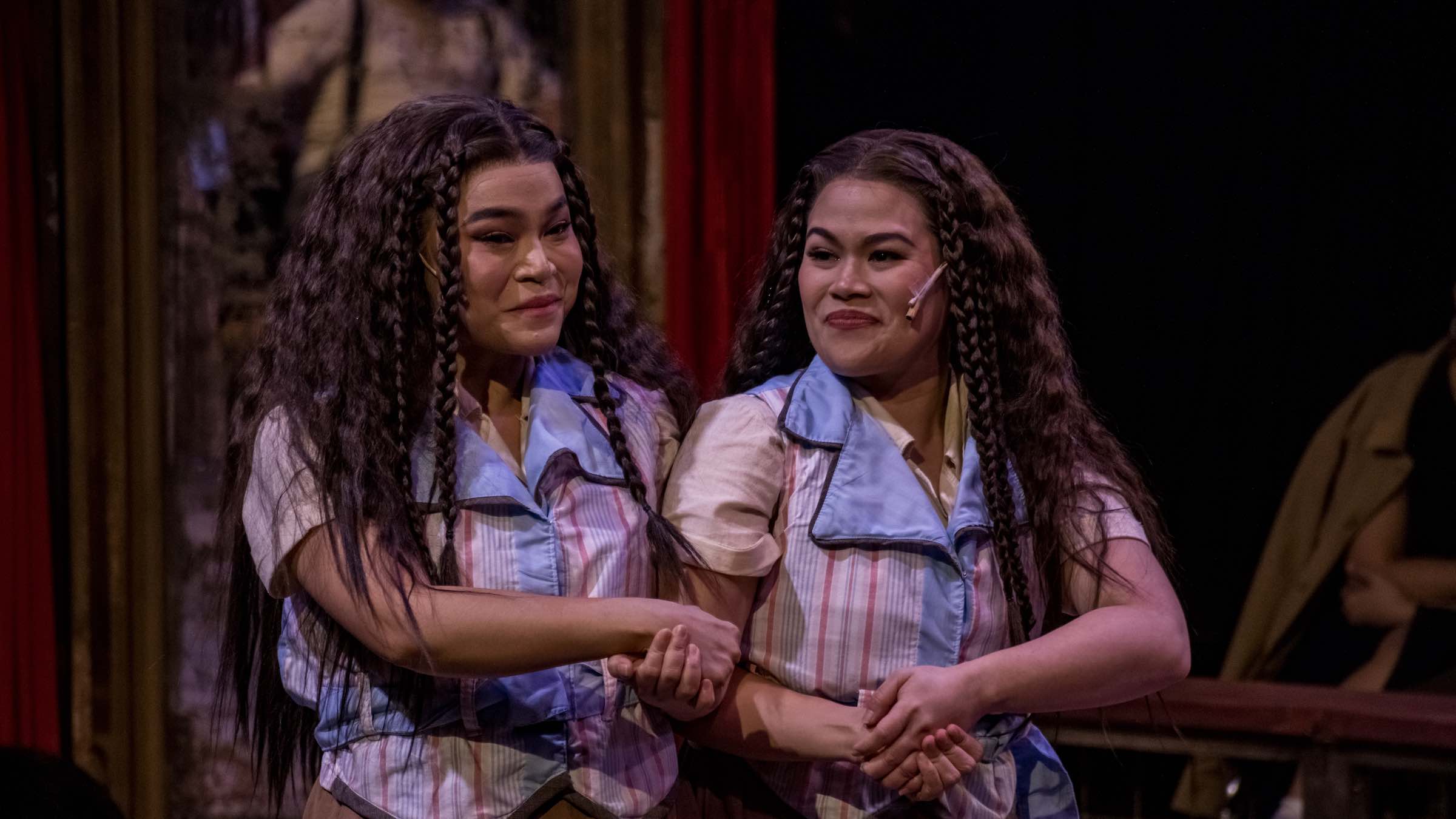
Helmed by Toff de Venecia, with musical direction by Ejay Yatco, Side Show presents the rather extraordinary lives of Daisy and Violet Hilton (Marynor Madamesila and Tanya Manalang, respectively), conjoined twins whose aspirations extended beyond their carnival existence. Their lives are a spectacle, one where they are constantly paraded and exploited. Daisy, the more ambitious of the two, dreams of stardom on the vaudeville circuit, a glittering world far removed from their current grim reality. Violet, on the other hand, yearns for a simpler life, for love and domesticity, like any “normal” woman.
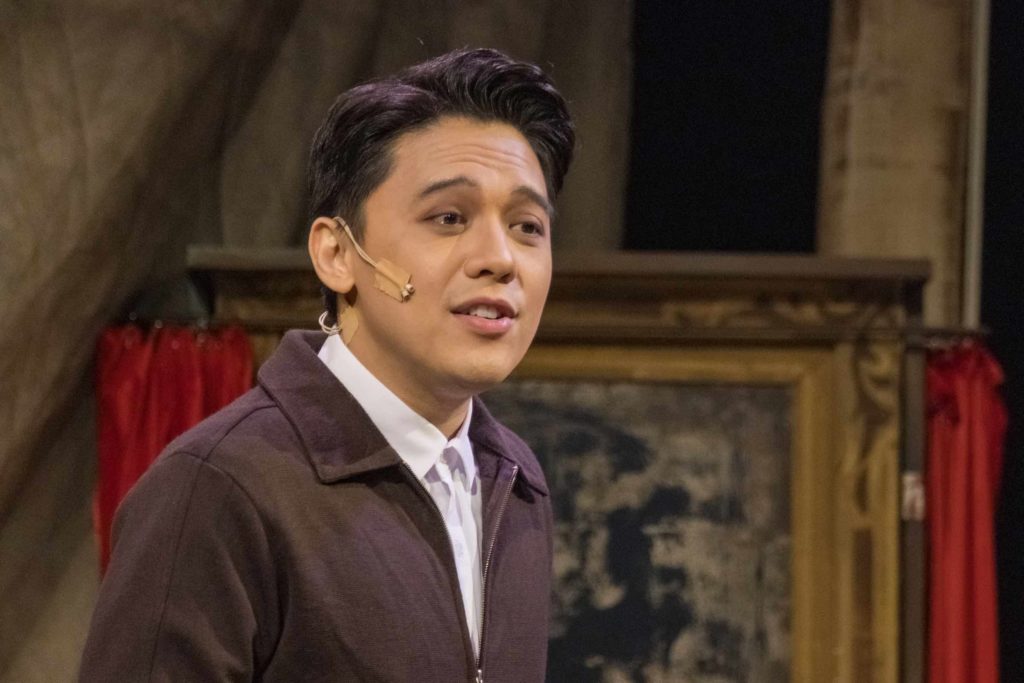
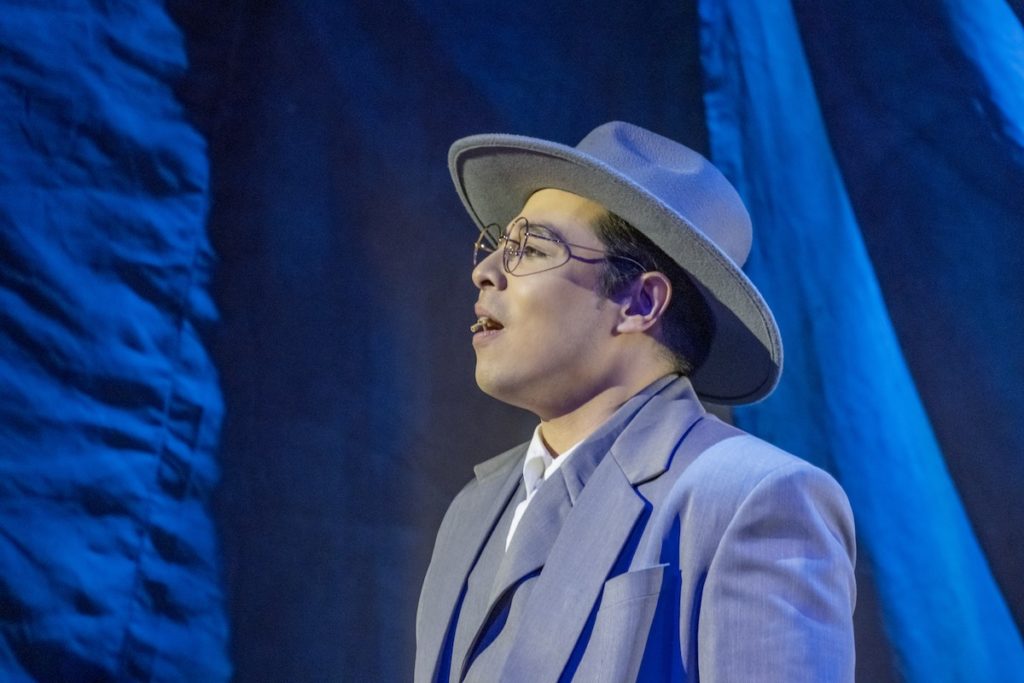
Their chance arrives with the appearance of Terry Connor (Reb Atadero), a talent scout, and Buddy Foster (Tim Pavino), a musician, who see potential beyond their “freak” status. They are whisked away from the confines of the sideshow, shedding their old identities and embracing the glamour of vaudeville. Yet, even amidst newfound fame, the twins grapple with the enduring challenges of their physical bond and their diverging desires. Daisy finds success in the spotlight, but Violet’s hopes for a conventional romance are perpetually thwarted. Their intertwined existence brings them fame, but the search for individual love and acceptance proves to be a more complex, and often heartbreaking, endeavor. The musical, much like their lives, is a poignant exploration of identity, dreams, and the unwavering, complex bond between two extraordinary women.
The Frayed Edges of Production
The musical, with its inherently dramatic premise, arrived with a certain level of expectation, particularly given the known talents of its cast. However, as the production unfolded, it became apparent that the artistic prowess on stage often clashed with its technical and directorial execution. The show’s attempt to portray the twins’ journey from exploited performers to vaudeville stars was frequently undermined by bizarre choices in staging. It often felt over-engineered, detracting from the emotional core rather than enhancing it. Technical cues, on occasion, registered as less than precise, creating minor but noticeable disruptions both in the visuals and the audio. Furthermore, certain directorial choices leaned into what could only be described as terrible derivative gimmicks (in the manner of Jamie Lloyd’s “Live Feed” nonsense employed in the Sunset Boulevard and Evita revivals), providing little by way of novel insight. It is baffling that anybody could sit through entire scenes of shaky, buffering footage projected onto makeshift sheets (by severely underpowered projectors, I might add, that made everything look like the five-peso versions of dark, latter-season Game of Thrones episodes). It was fun in Sunset Boulevard, was the subject of much critical ridicule in Evita, and here; it’s just anachronistic, trite, and bad. In essence, the compelling performances were often tasked with compensating for a production that, while ambitious, struggled to achieve cohesion.
Related posts:

The Gift of a Great Cast
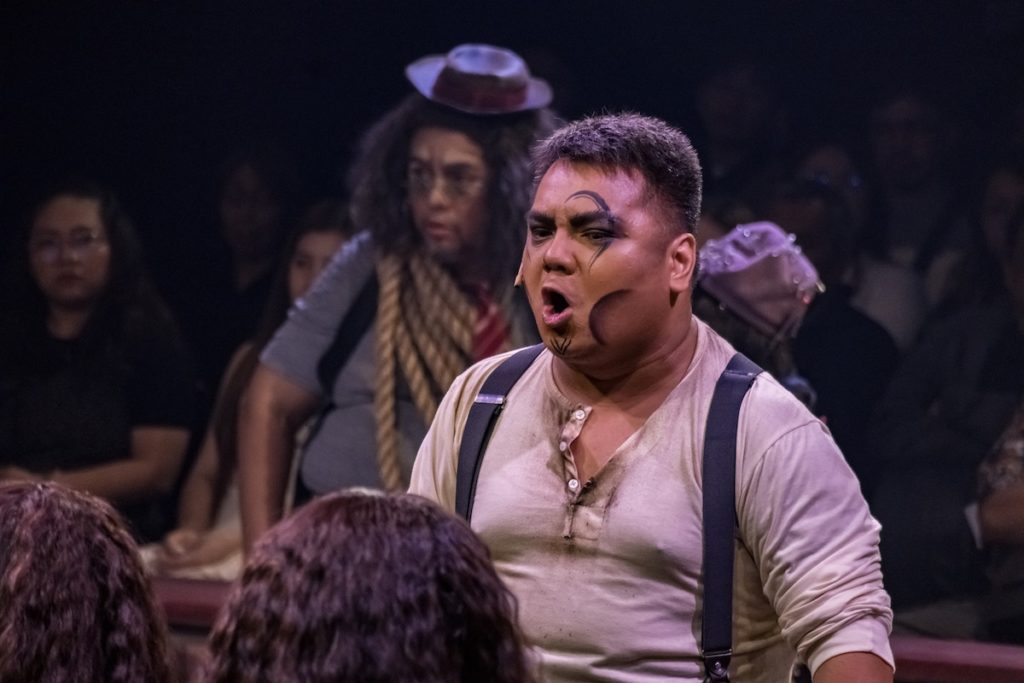
Despite the production’s aforementioned challenges, the cast largely succeeded in delivering some very compelling portrayals. The four principal actors, embodying Daisy, Violet, Terry, and Buddy, consistently turned in performances that were both impressive in their technical execution and genuinely soulful in their emotional depth, often serving as the production’s anchoring force. Of particular note was Tim Pavino’s magnetic portrayal of Buddy, which was delightful in its earnestness, and Marvin Ong’s portrayal of Jake truly commanded comment. The latter’s musical performance was particularly impactful, demonstrating a formidable vocal range that resonated profoundly with the audience. His contribution was definitely a highlight, consistently eliciting strong reactions and providing moments of undeniable power that verged on bringing down the house.
The Uneven Curtain Call: A Final Reflection on Side Show‘s Unfulfilled Promise
Ultimately, The Sandbox Collective’s Side Show leaves one in a fugue state of bittersweet reflection. It is a musical with tremendous heart and a compelling story, brought to life by a truly gifted cast. However, this production, much like the fragile attractions of a fading carnival, revealed its structural weaknesses. While the performers provided the vibrant soul and formidable talent, the lackluster production quality—the overworked staging, the technical missteps, and the derivative gimmicks—prevented the show from fully realizing its extraordinary potential. It was a performance where the human element triumphed, but the overall presentation remained a disjointed spectacle, leaving the audience to ponder what might have been had the illusion held together a little more securely.
Click here for more stories like Sandbox Collective’s ‘Side Show’. You may also follow and subscribe to our social media accounts: Facebook, YouTube, Instagram, TikTok, X, and Kumu.